Win a level, earn a star, spend the star on a task in a house, a garden or an aquarium. That loop is the actual product, and understanding how it is priced explains most of what these games do.
Two systems, one loop
The puzzle produces a currency at a fairly steady rate: one level, one star, give or take. The storyline consumes that currency at a rate the designers control precisely, and can change at any point without touching the puzzle at all.
This separation is the key to reading these games. When a game starts feeling slow, players usually assume the levels got harder. Sometimes they did. More often the levels stayed similar and the tasks started costing three stars instead of one, which is a quieter way of achieving the same effect.
Watch the exchange rate, not the difficulty
The number worth tracking is stars per task, and it is displayed openly on every task in every game of this kind. Early on, tasks cost one star and levels are quick, so the storyline moves as fast as you can play. Later, tasks cost two or three stars, and levels take longer, so the same amount of play produces visibly less story.
Neither half of that is hidden or dishonest. But because the two changes happen gradually and at the same time, the combined effect is much larger than either alone, and it is easy to experience it as your own performance declining.
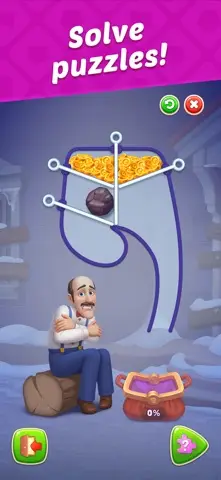
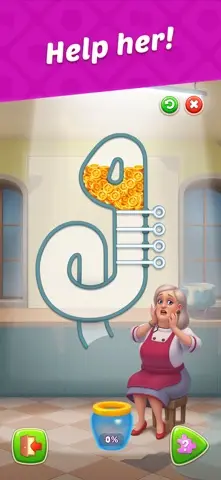
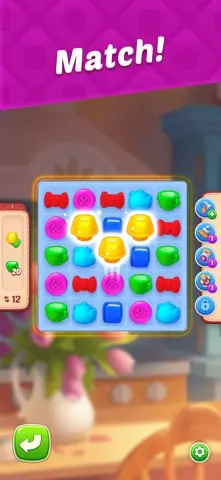
A quick sanity check on any game in this genre: note how many stars the current chapter needs and how many levels you clear per session. That ratio tells you how long the chapter will take far more reliably than how hard the levels feel.
Why the storyline exists at all
A pure puzzle game has no natural reason to be opened tomorrow. A storyline supplies one: there is a room half finished, and finishing it is a small concrete goal that a level on its own does not provide. That is a legitimate and rather elegant piece of design, and it is why this structure has taken over the genre.
It also creates the commercial hook. Somebody halfway through a room, out of lives, is in a much more receptive state than somebody who has just finished a level with nothing pending. The tasks are not merely decoration; they are what makes the timer matter.
Telling paced from stalled
Every game in this shape slows down, and slowing down is not the same as stopping. The distinction worth making:
- Paced. Tasks cost more, but a normal session still completes one or two. Progress is slower and continuous.
- Stalled. A single task costs more stars than several sessions produce, and the game starts offering to sell the difference. Progress has effectively stopped without the game saying so.
The second state is where people spend money they later regret, because it arrives gradually and feels like a personal failure rather than a designed threshold. Naming it accurately makes it much easier to decide, calmly, whether to keep playing, take a break or pay.
Playing these games on your own terms
The structure is enjoyable if you let the storyline be a bonus rather than an obligation. A few practical habits help.
- Spend stars as you earn them. Hoarding for a big task produces long stretches with no reward, which is precisely the state the design is trying to sell you out of.
- Finish a room, then stop. A natural stopping point is worth more than one more level, and the game will not offer you one.
- Ignore the timer. Nothing in the storyline expires; a half-finished room is in exactly the same state tomorrow.
- Re-read the task price when a chapter changes. That is the moment the pacing usually shifts, and noticing it stops it from feeling like a slump.
Where the genre goes next
Newer titles increasingly attach two or three progression layers at once: a storyline, a seasonal pass and a team goal, each with its own currency and its own timer. The reading method does not change. Find what each layer produces, find what it consumes, and check the rate between them. Every one of these systems is legible if you look at it as a price rather than as a difficulty.